


Why Do a Psilocybin Retreat?
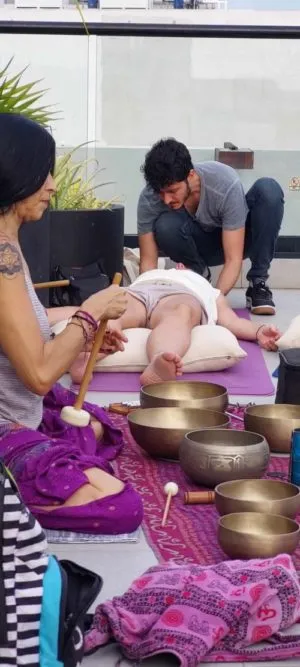
Existing Life Synergy website photograph. This image does not document the screening or medical arrangements described in the article.
Quick answer
A psilocybin retreat is worth considering if you want intentional space for reflection, preparation, and support rather than an unsupervised experience. But a retreat isn’t automatically safe because it has facilitators, beautiful surroundings, or a thoughtful website. Look at its screening, consent policies, session support, emergency arrangements, and follow-up.
As a retreat host, I’d rather help you make a clear decision than convince you to attend. That decision might be a supported retreat, a non-psychedelic retreat, or no retreat at all. The useful question is: “What conditions would help me explore responsibly, and are they actually present?”
Why consider a retreat rather than using alone?
For me, the strongest argument isn’t that a retreat promises a bigger experience. It’s that preparation, support, and reflection deserve as much attention as the experience itself.
Psilocybin affects serotonin pathways and can alter mood, thought, and perception. Its effects are unpredictable, and adverse experiences can include intense fear, panic, anxiety, nausea, and increased heart rate or blood pressure.1 That’s why I wouldn’t treat using alone as equivalent to attending a genuinely supported program.
Traveling solo is different from being unsupervised. You can arrive without a friend or partner and still have preparation, facilitators, and an agreed plan for help. Equally, attending with a friend doesn’t establish that a program has adequate safeguards.
The 2008 research guidelines Human Hallucinogen Research: Guidelines for Safety emphasize screening, preparation, interpersonal support, session monitoring, and follow-up.2 Those are research guidelines, not proof that a particular retreat is safe. Still, they offer a useful lens: examine the support around the experience, not just the experience being advertised.
What you might be looking for
Space to ask a better question
You don’t need to arrive with a grand theory about your life. I think curiosity, reflection, creativity, and spiritual questions are reasonable starting points.
Perhaps you want to ask, “What am I avoiding?” or “Which commitments still feel like mine?” A retreat can be a deliberate pause in which to examine those questions. I wouldn’t make the psychedelic element a requirement for meaningful reflection.
You also don’t have to decide that everything you experience carries a profound message. Sometimes a question is worth keeping without immediately answering it.
Connection without surrendering your boundaries
I value the possibility of sharing space with people who are also taking time to reflect. But I don’t think community should require confession, compulsory closeness, or agreement with a facilitator’s worldview.
Before booking, ask whether you can keep personal details private, decline touch, and raise concerns individually. Ask how staff handle pressure between participants. A welcoming atmosphere should leave room for “no,” not just enthusiastic participation.
A different relationship with change
I’d approach transformation as a possibility to explore, not a product to purchase. What would change actually look like in your daily life? A clearer boundary? An honest conversation? More time for something you value?
Those modest answers can be more useful than expecting to return as an entirely new person. Your laundry, unfortunately, probably hasn’t transformed while you were away.
What retreat anticipation meant to me
In 2019, a relationship ended, and I faced depression. I skipped a holiday and looked ahead to a group retreat in Portugal. Anticipating that retreat helped keep me afloat. When it was canceled, it felt as though the ship had sunk.
That’s a story about anticipation, not a psilocybin experience. I’m not saying the Portugal retreat involved psilocybin, and I didn’t attend it.
Looking back, I recognize how much hope I’d placed in something ahead of me. That makes me careful about how I talk about retreats now. I don’t want anyone to feel that one booking holds their entire future.
My invitation is to consider a retreat as one possible part of your life, not the thing that must rescue it.
Safety is a set of safeguards, not a setting
A peaceful room matters less to me than clear answers to uncomfortable questions. “We take safety seriously” should be the beginning of a conversation, not its conclusion.
Screening must be meaningful
NCCIH identifies serious safety concerns for people with certain psychiatric conditions, including psychotic disorders and severe bipolar disorder.1 The 2008 research guidelines also describe screening for personal and family psychiatric history, cardiovascular health, and potentially interacting medications.2
Ask who reviews your information, what qualifications they have, and what happens when something needs further assessment. A screening process should be able to conclude that participation isn’t appropriate.
Disclose medications and supplements honestly. Never stop or change prescribed medication to qualify for a retreat without guidance from your prescribing clinician. At Life Synergy, disclosure of medication, supplements, and psychiatric and cardiovascular history is part of screening, with acceptance required before a direct-booking deposit.3
Support needs a practical definition
Ask who stays present throughout sessions, how many participants each facilitator supports, and what training those people have. Then ask what happens if someone becomes frightened, physically unwell, or needs outside care.
The research guidelines describe continuous monitoring by at least two trained monitors and arrangements for managing psychological or medical difficulties.2 Don’t assume a wellness retreat follows those protocols simply because it refers to research.
Request specifics about emergency transport, overnight support, and access to medical care. “A doctor is available” needs clarification: on site, on call, or reachable only under certain circumstances?
Consent includes interpretation
I’d ask for clear policies on touch, privacy, photography, and participation before arriving. Who can you approach if a boundary is crossed? Can you decline an activity without being persuaded to reconsider?
Meaning belongs to you. A facilitator shouldn’t insist that your experience proves a spiritual belief, reveals a hidden truth, or requires a major life decision. Support and certainty aren’t the same thing.
What Life Synergy offers, and what it doesn’t
Our published standard program runs for five days and four nights, with groups of up to 11 and two facilitated ceremonies. Locations include Playa del Carmen and selected Sacbé jungle villa dates; the team varies by date.3
Day one includes a medical Q&A and threshold session with Dr. Mauricio Bussoli, with a pulse and oxygen-saturation check during that session. A doctor is on call afterward, rather than continuously on site. The threshold session doesn’t predict or guarantee your response to a later ceremony.3
Facilitators remain present throughout ceremonies. The program lists a team member trained in first aid and CPR, a standby vehicle and driver, and a local emergency protocol.3 I encourage you to ask how those arrangements work for your specific dates.
The program also includes yoga, meditation, breathwork, temazcal/cacao, nature time, meals, integration resources, and a one-to-one integration call after returning home.3 Ask which activities suit your circumstances and how participation choices are handled.
Life Synergy is a wellness and ceremonial program, not treatment, a licensed clinical service, a clinical trial, a hospital, or psychiatric care.3 You can review our mushroom retreat and contact us with questions before deciding.
Set an intention without scripting the experience
I prefer an intention that opens a conversation rather than demands a result. “I must fix my relationship” puts a lot of pressure on an unpredictable experience. “I want to notice how I respond to uncertainty” leaves more room.
Try writing three short statements:
- My question: “Where am I saying yes when I mean no?”
- My boundary: “I don’t want to discuss certain personal details with the group.”
- My next step: “After returning, I’ll review one commitment before taking on another.”
Bring those statements into preparation conversations. Ask how the team supports distress and how you can communicate boundaries during a session.
I wouldn’t judge the experience by whether your original intention appeared in a recognizable form. You can return to your question afterward without forcing every emotion or image to explain it. An intention is a compass, not a customer-service order.
Give reflection somewhere to land after returning
For me, integration means asking what, if anything, you want to carry into ordinary life. You don’t have to turn every impression into an instruction.
Before leaving home, make a practical return plan:
- Protect some quiet time. Where possible, avoid scheduling demanding commitments immediately after travel.
- Choose a support person. Agree on a check-in with someone who can listen without telling you what everything means.
- Write before deciding. Separate what happened, what you think it means, and what you’re considering doing.
- Choose one small action. Try a manageable change, such as a weekly reflection period or a conversation you’ve postponed.
- Review it later. Ask whether that action still fits your values once you’re back in familiar routines.
I’d avoid making major relationship, financial, or career decisions solely because an experience felt convincing. Give important choices time and, where appropriate, professional input.
For ongoing distress, seek qualified help rather than relying only on retreat resources. Life Synergy’s follow-up integration call is part of its wellness program, not psychiatric care.3
When not attending may be the better choice
I’d pause if you feel pressured by a partner, a group, or a promise of transformation. I’d also pause if the organizer won’t answer practical questions, discourages outside medical advice, or treats your hesitation as something to overcome.
Clinical research uses screening and structured safeguards that shouldn’t be assumed to exist in a retreat setting.2 Research interest in psilocybin doesn’t establish that a wellness retreat can treat your condition.
If you need urgent mental health support, seek qualified care rather than treating a retreat booking as the response. You can also choose reflection without psilocybin. There’s nothing second-best about choosing the kind of support that fits you.
Frequently asked questions
Is a psilocybin retreat safer than using alone?
Don’t assume so. Evaluate screening, facilitator presence, consent policies, emergency arrangements, and follow-up. Research safety guidelines emphasize preparation and monitoring, but they don’t validate individual retreats.2
Can I attend if I’m traveling solo?
Traveling solo isn’t the same as unsupervised use. Life Synergy welcomes many solo travelers, but eligibility depends on screening.3 Ask about arrival arrangements, privacy, and available support before booking.
Can a retreat treat depression?
What if I become frightened during a session?
Intense fear and panic are possible adverse effects.1 Ask how facilitators respond, who stays present, and when medical assistance is sought. Don’t accept reassurance in place of a concrete plan.
Should I change medication before attending?
Don’t stop or change medication without your prescribing clinician’s guidance. Life Synergy requires disclosure of medications and supplements during screening.3 Raise questions before booking, not just before a ceremony.
What if I don’t experience a transformation?
You haven’t failed. I wouldn’t measure your experience against a promised breakthrough. Reflection can include uncertainty, disappointment, or deciding not to make changes. You don’t owe anyone a dramatic story.
Sources
- National Center for Complementary and Integrative Health: *Psilocybin for Mental Health and Addiction: What You Need To Know*.
- Johnson, Richards, and Griffiths: *Human Hallucinogen Research: Guidelines for Safety*. Journal of Psychopharmacology, 2008.
- Life Synergy Retreat: Mushroom Retreat program. Organizer program information verified October 8, 2026.
Bring your questions, not a deadline
Explore the current mushroom-retreat program or contact us to discuss screening, support and fit. You are welcome to ask questions without making a commitment.